Kenya has long been established as a leader in high-grade, East African arabica. Its best lots are famed for their fruity, clean, complex profiles, offering balance and pronounced tasting notes of everything from berries and stone fruit to sweet citrus, rightly fetching a handsome auction price.
Coffee was introduced to Kenya in 1893 by French missionaries who brought Bourbon varieties from Réunion (then called Bourbon Island). Early cultivation began near Nairobi.
During British colonial rule, large estates dominated coffee production, and indigenous Kenyans were initially restricted from growing coffee commercially. After independence in 1963, smallholder farmers were allowed to participate, leading to the cooperative system that remains central to Kenya’s coffee sector today.
Kenya has since gained international recognition for its high-quality Arabica coffee, known for bright acidity, complex fruit notes, and exceptional cup clarity.
Common Arabica varieties:
SL28, SL34, Ruiru 11, Batian, and K7
Key growing regions:
Nyeri, Kirinyaga, Murang’a, Kiambu, Embu, Meru, Tharaka-Nithi, Machakos, Kericho (Rift Valley), Nandi Hills
Harvest months:
(Main) May – July / (Fly) October – December
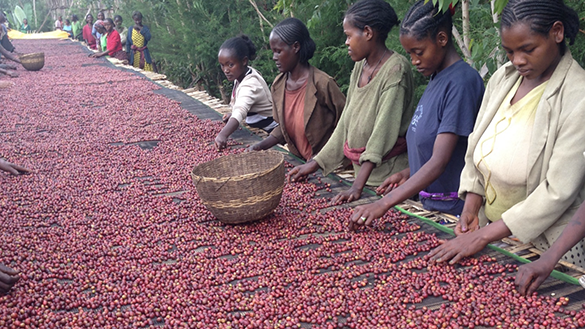
Kaliluni Factory is affiliated to Kaliluni F.C.S. as the only factory. Kaliluni F.C.S. is part of the larger umbrella organisation, the Machakos Co-operative Union, along with around 28 other F.C.S.s.
The Union offers the societies services that include coffee milling and marketing, training and the provision of farm inputs at subsidised prices. These benefits enable producers to bring in a great, high quality harvest at exactly the right time. The Union also offers a wide range of services, including transport, bookkeeping, accountancy and access to coffee seedlings.
Varietal: SL28, SL34, Ruiru 11, Batian
Producer: Kaliluni F.C.S.
Processing: Kenyan Washed
Elevation: 1700 – 1900 MASL
Region: Machakos County
Cup Profile: TART ACIDITY, TEA-LIKE BODY, CLEAN AFTERTASTE. NOTES OF DARK CHOCOLATE, CARAMEL, AND DRIED FRUITS
Ngomano factory has 730 members who have an average of ½ a hectare each. Besides coffee, the farmers also grow beans and maize and keep dairy cattle, goats and sheep. The average farmer is 50. Ngomano factory is the only factory of Ngomano F.C.S. with a total estimated of 86 hectares and an annual production of 43k kg.
The farm that composes the cooperative are dressed with red-volcanic soil that infuses it with all the mineral and organic goodness necessary for optimum production.
Varietal: SL28, SL24, Ruiru 11
Producer: Ngomano F.C.S. & Factory
Processing: Kenyan Washed
Elevation: 1750 MASL
Region: Machakos County
Cup Profile: NOTES OF CARAMEL, BURNT SUGAR, BUTTER AND GREEN APPLE. ROUNDED BODY, TART ACIDITY AND BALANCED
Established in 1979, the FCS has around 1000 members who have an average of half an hectare each. Besides coffee, the farmers also grow beans and maize and keep dairy cattles, goat and sheep. The average farmer is 50. Membership accounts for 330 women and 690 men.
Varietal: SL28
Producer: Muthunzuuni FCS members
Processing: Kenyan Washed
Elevation: 1700 – 1900 MASL
Region: Machakos County
Cup Profile: SILKY BODY WITH A CLEAN ACIDITY. CITRUS NOTES OF GRAPEFRUIT AND MANDARIN, CINNAMON AND HERBAL UNDERTONES. ROUNDED AFTERTASTE AND A BALANCED COFFEE.
Ngomano factory has 730 members who have an average of ½ a hectare each. Besides coffee, the farmers also grow beans and maize and keep dairy cattle, goats and sheep. The average farmer is 50. Ngomano factory is the only factory of Ngomano F.C.S. with a total estimated of 86 hectares and an annual production of 43k kg.
The farm that composes the cooperative are dressed with red-volcanic soil that infuses it with all the mineral and organic goodness necessary for optimum production.
Varietal: SL28, SL24, Ruiru 11
Producer: Ngomano F.C.S. & Factory
Processing: Kenyan Washed
Elevation: 1750 MASL
Region: Machakos County
Cup Profile: CITRUS NOTES OF MANDARIN AND ORANGE WITH HINTS OF HERB. SILKY BODY, MILD ACIDITY AND A JUICY AFTERTASTE
Coffee was first planted in Kenya at the French Catholic Mission in Bura on the slopes of Taita hills as early as 1885. In 1896, it was planted in a mission station in Kibwezi, near Machakos town about 200 km from Nairobi. However, due to the hot and dry climate, the coffee did not do well.
Coffee in Kenya undergoes a thorough grading system. For each coffee lot produced, the coffee beans are rigorously tested for quality and then sorted into various grades depending on size, weight and shape. Kenya AA coffee, Kenya’s premium grade of coffee, is simply a measure of the size, weight and shape of the bean. Size is important because bigger beans mean more aroma and flavour – the two qualities that are of the utmost importance to coffee drinkers..
Varietal: SL28, SL24, Ruiru
Producer: Rumukia Farmers Cooperative Society
Processing: Kenyan Washed
Elevation: 1700 – 1850 MASL
Region: Mt. Kenya, Nyeri
Cup Profile: BRIGHT ACIDITY OF RED APPLE, SMOOTH BODY, NOTES OF VANILLA AND APRICOT WITH PLEASANT, LINGERING AFTERTASTE
The Nairobi Coffee Exchange auctions are a quality-based payment system that functions as the nerve centre of a well-oiled industry built upon decades of lab-based Agri-research, applied farming and a strong network of cooperatives. At the exchanges, small farmers have a ‘seat at the table’ so to speak, where they can access a wide range of international buyers, who have the will and capital to outbid one another, in the perennial quest for a perfect cup.
Truth be told, Kenya’s growers are owed much of today’s industry praise. For generations they have pushed the envelope and tested the limits of farming and processing capabilities in order to embrace advances in growing science.
The main growing regions extend from the 5,000 metre central peak of Mount Kenya all the way to the outskirts of the capital city of Nairobi to the south. Another portion of arabica farmlands lie on the slopes of Mt. Elgon, against Kenya’s western border with Uganda.
Varietal: Arabica
Producer: Various Smallholders
Elevation: 1,400 – 2,000 MASL
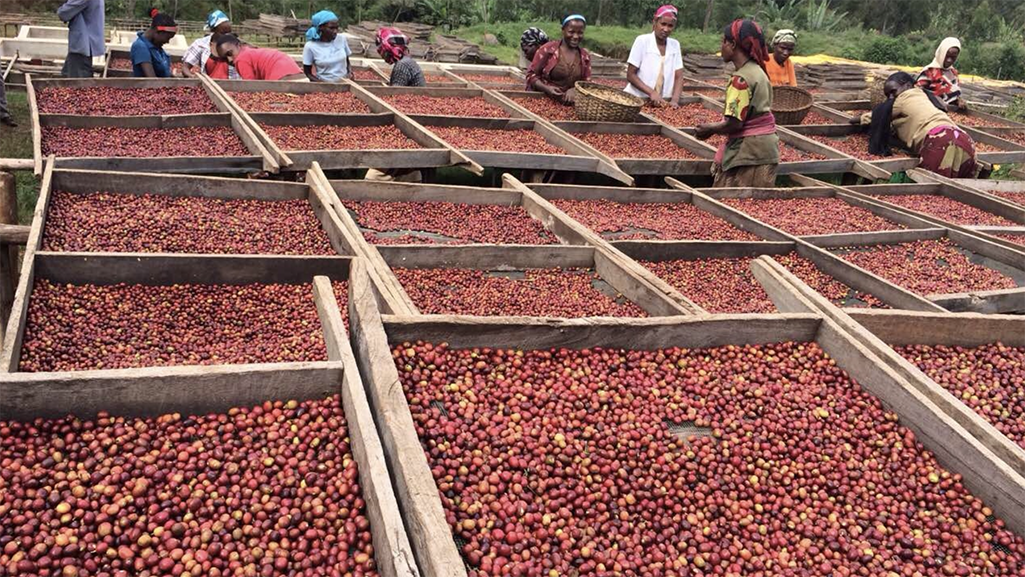
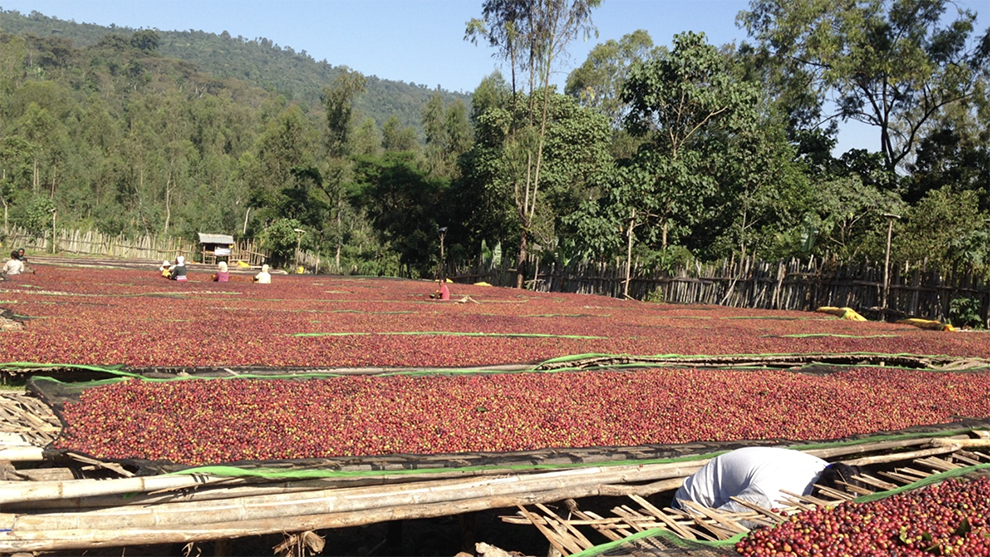
Processing: Washed Then Sun-dried
Region: Mt. Kenya, Central Kenya
Cup Profile: very bright acidity, orange, medium body, notes of currant, black tea and a hint of blackberry